









Always in sync, even across episodes
No more "wait, let me pause" moments. Our sync engine keeps everyone frame-perfect—even when you binge multiple episodes in one party.
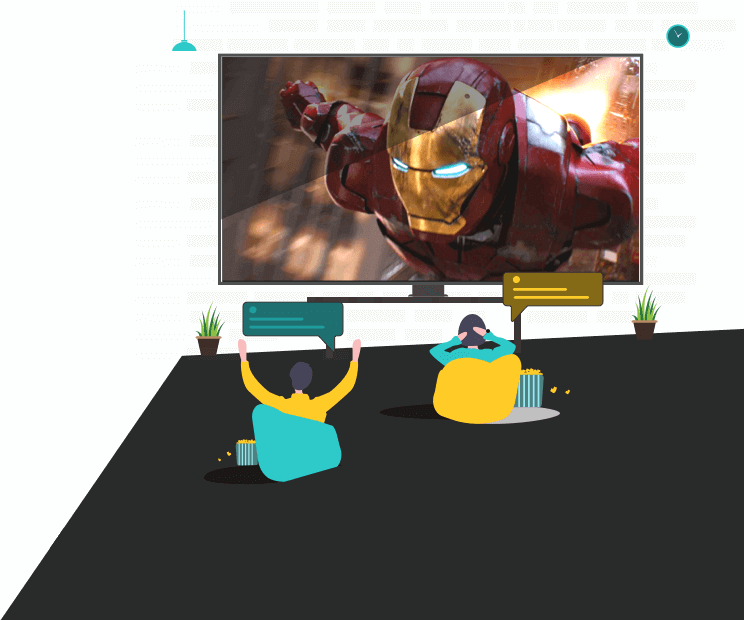
Start playing any video on Netflix, Disney+, or 10+ supported platforms.
Click the Flickcall logo on top right once video starts or hit the Flickcall icon on chrome toolbar. Your watch party is ready in one click.
Copy the party link and send it to your friends. They join with one click—no sign-up required.
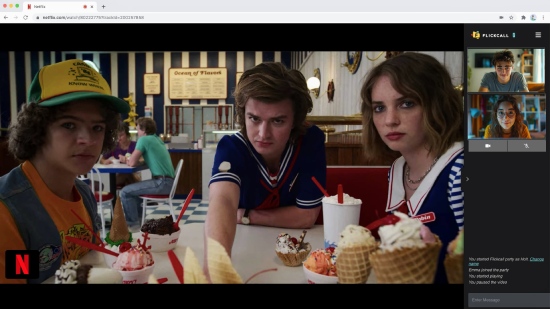
Create watch parties on Netflix, Disney+, JioHotstar, JioHotstar, HBO Max, MAX, Hulu, Prime Video, Youtube, Zee5, Sony Liv, JioHotstar with Flickcall.

No more "wait, let me pause" moments. Our sync engine keeps everyone frame-perfect—even when you binge multiple episodes in one party.

Catch your friends gasping at plot twists. Share laughter in real-time. Video chat makes every watch party feel like you're on the same couch.

Install the extension, play any video, click the Flickcall icon. That's it—share the link and you're watching together.
When you pause video, your mic unmutes. When you play, it mutes. Smart Mic knows when you need to talk. No fumbling with buttons, just natural conversation.
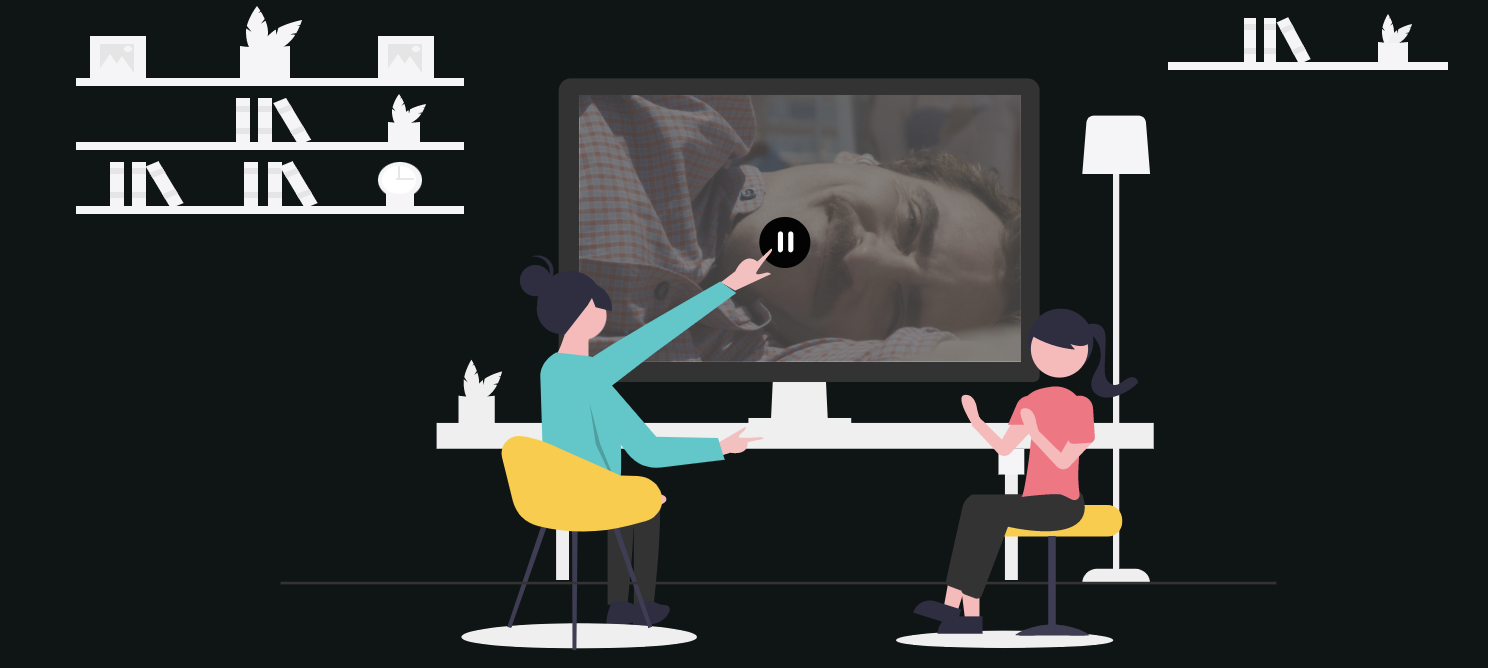
We use peer-to-peer technology to connect you directly with your friends. Your video calls and chats are never routed through our servers unless direct connection is blocked*.
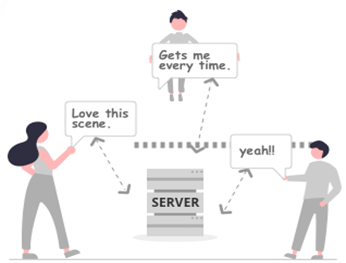
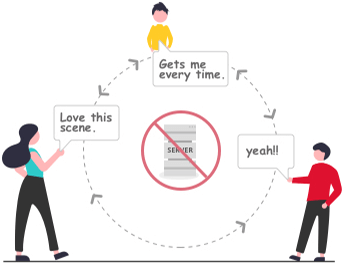
* In some cases, firewall setting doesn't allow direct connection, the calls and messages are encrypted and transmitted via routing servers.
The exhibition " GIRLS: On Boredom, Rebellion and Being In-Between " explores how the "girl's gaze" and the aesthetics of girlhood—such as bows, school uniforms, and glitter—are reclaimed by artists to challenge fixed definitions of age and gender.
Projects like the Girl Museum work to define "girlhood" as a cultural condition and a powerful, enduring identity rather than a temporary phase.
The specific string "Girls Forever (1610) mp4" mirrors the titling conventions of contemporary digital art or K-pop-inspired fiction. For instance, recent literature like Jessica: The Manhattan Stories features a fictional world-renowned K-pop group called "Girls Forever". The addition of "(1610)" may be a creative juxtaposition, blending the ultra-modernity of the "mp4" format with the rigid social structures of the 17th century to highlight how little—or how much—the "girl" archetype has changed over 400 years. GIRLS. On Boredom, Rebellion and Being In-Between - MoMu
Modern exhibitions and movements have begun to "take back" the term "girl" from its pejorative roots, arguing that women can be "girls forever" just as men are often "boys forever" without losing respect.
Critics have noted a dark side to this "forever" ideal; pop culture often immortalizes women who die young (the "27 Club") as "pretty girls" forever, sparing them the scrutiny and criticism that comes with aging in the public eye. Meta-Fictional Connections
The phrase "Girls Forever (1610) mp4" likely refers to a conceptual or contemporary digital artwork or a meta-fictional artifact rather than a historical 17th-century video file. The date 1610 serves as a symbolic anchor to the , a time when the "young girl" in art history was often portrayed as a silent, anonymous subject defined by her relationship to her family or future domestic roles. The Archetype of the "Silent Subject"
In the early 1600s, portraits of young women emphasized virtue and innocence through specific props—holding kittens, playing pianos, or clasping hands politely. These images were not about the girls' individual agency but about their symbolic value in a patriarchal society. The concept of "Girls Forever" in this context critiques the historical tendency to immortalize women in a state of permanent, decorative youth. Contemporary Reclamation of "Girlhood"
The exhibition " GIRLS: On Boredom, Rebellion and Being In-Between " explores how the "girl's gaze" and the aesthetics of girlhood—such as bows, school uniforms, and glitter—are reclaimed by artists to challenge fixed definitions of age and gender.
Projects like the Girl Museum work to define "girlhood" as a cultural condition and a powerful, enduring identity rather than a temporary phase. Girls Forever (1610) mp4
The specific string "Girls Forever (1610) mp4" mirrors the titling conventions of contemporary digital art or K-pop-inspired fiction. For instance, recent literature like Jessica: The Manhattan Stories features a fictional world-renowned K-pop group called "Girls Forever". The addition of "(1610)" may be a creative juxtaposition, blending the ultra-modernity of the "mp4" format with the rigid social structures of the 17th century to highlight how little—or how much—the "girl" archetype has changed over 400 years. GIRLS. On Boredom, Rebellion and Being In-Between - MoMu The exhibition " GIRLS: On Boredom, Rebellion and
Modern exhibitions and movements have begun to "take back" the term "girl" from its pejorative roots, arguing that women can be "girls forever" just as men are often "boys forever" without losing respect. For instance, recent literature like Jessica: The Manhattan
Critics have noted a dark side to this "forever" ideal; pop culture often immortalizes women who die young (the "27 Club") as "pretty girls" forever, sparing them the scrutiny and criticism that comes with aging in the public eye. Meta-Fictional Connections
The phrase "Girls Forever (1610) mp4" likely refers to a conceptual or contemporary digital artwork or a meta-fictional artifact rather than a historical 17th-century video file. The date 1610 serves as a symbolic anchor to the , a time when the "young girl" in art history was often portrayed as a silent, anonymous subject defined by her relationship to her family or future domestic roles. The Archetype of the "Silent Subject"
In the early 1600s, portraits of young women emphasized virtue and innocence through specific props—holding kittens, playing pianos, or clasping hands politely. These images were not about the girls' individual agency but about their symbolic value in a patriarchal society. The concept of "Girls Forever" in this context critiques the historical tendency to immortalize women in a state of permanent, decorative youth. Contemporary Reclamation of "Girlhood"